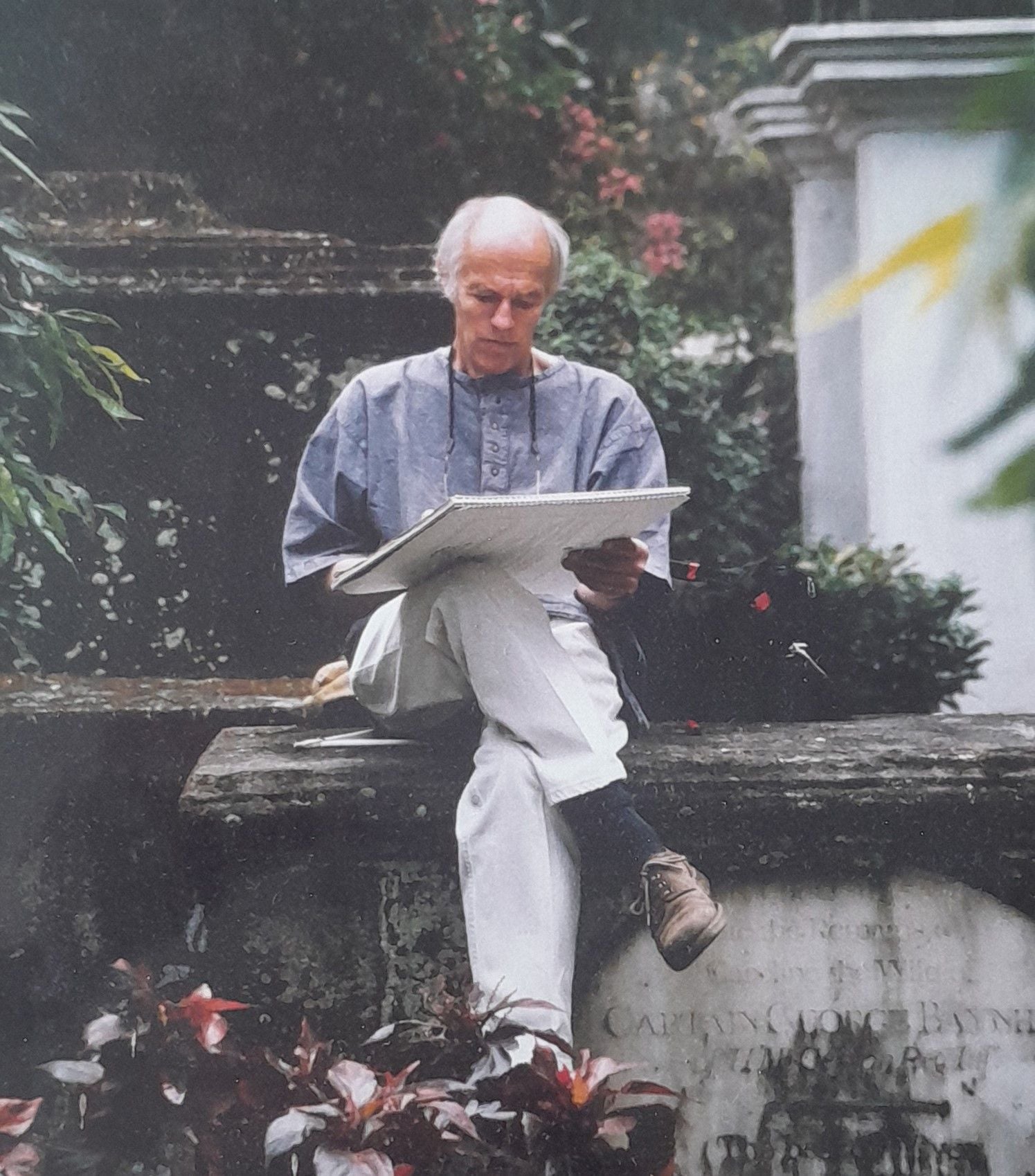
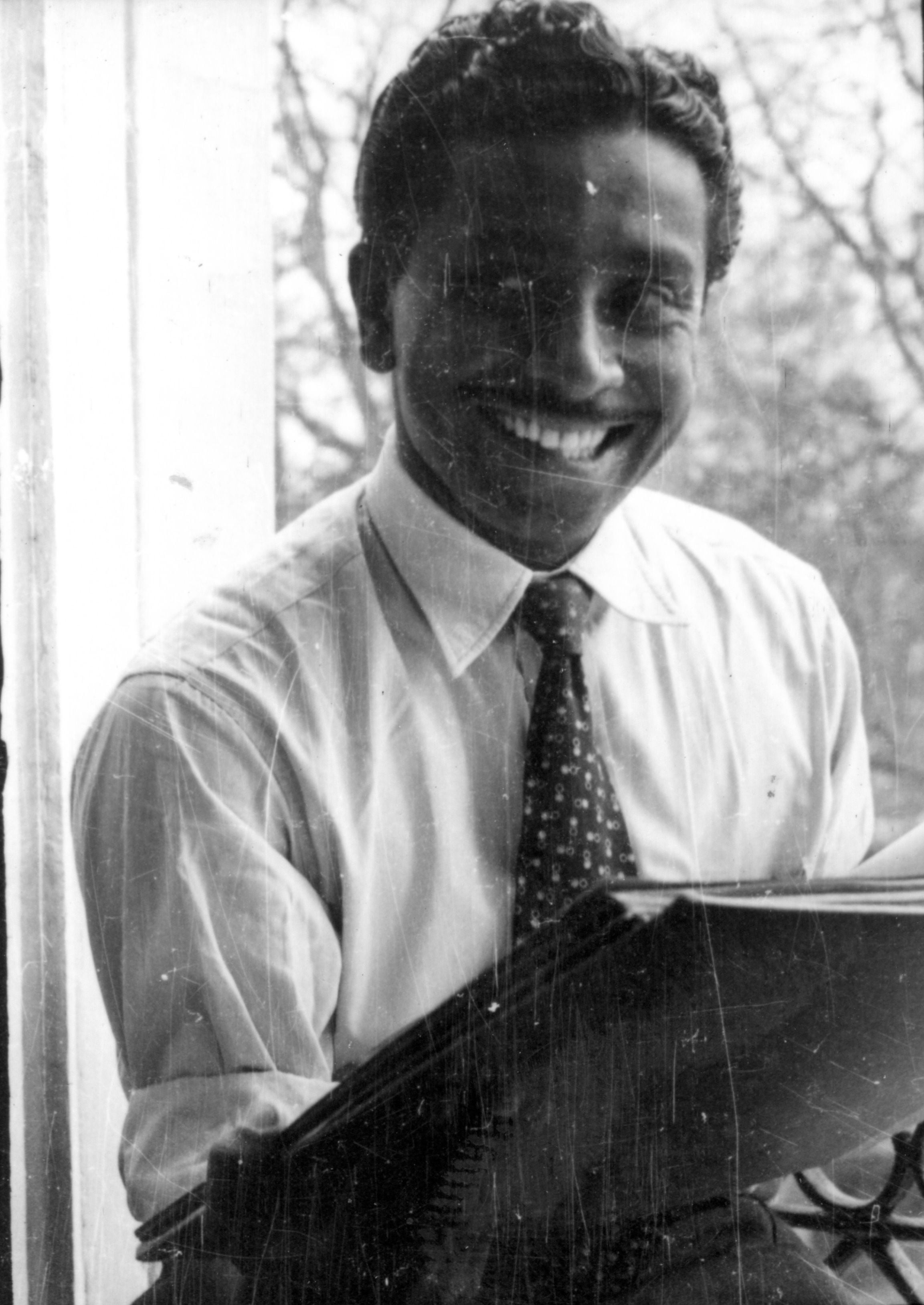
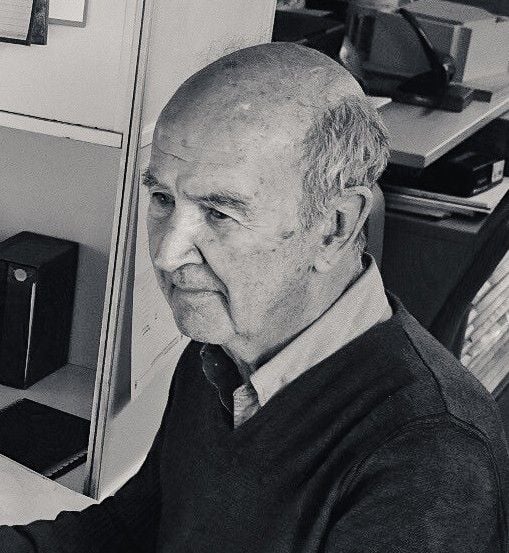
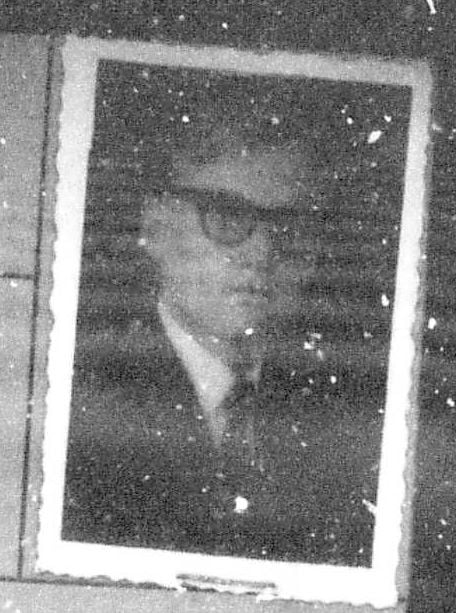
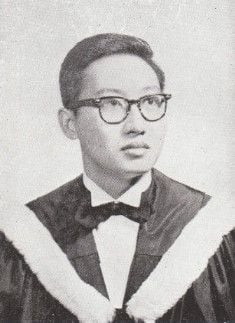
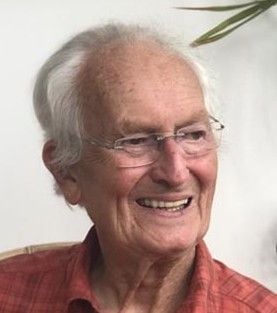
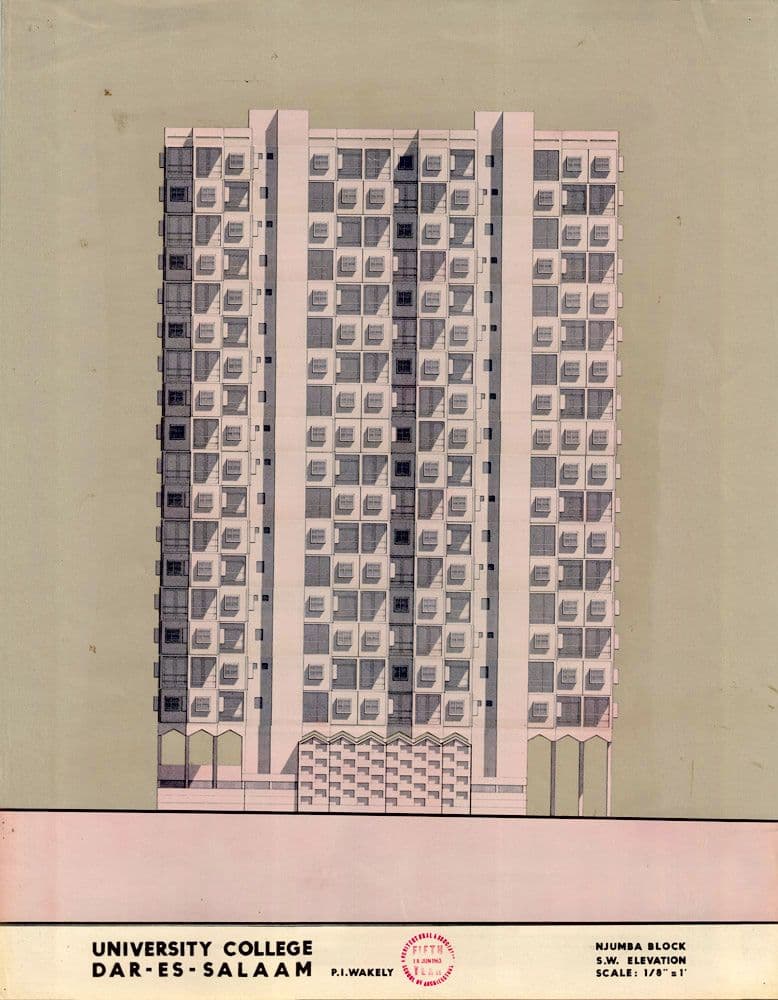
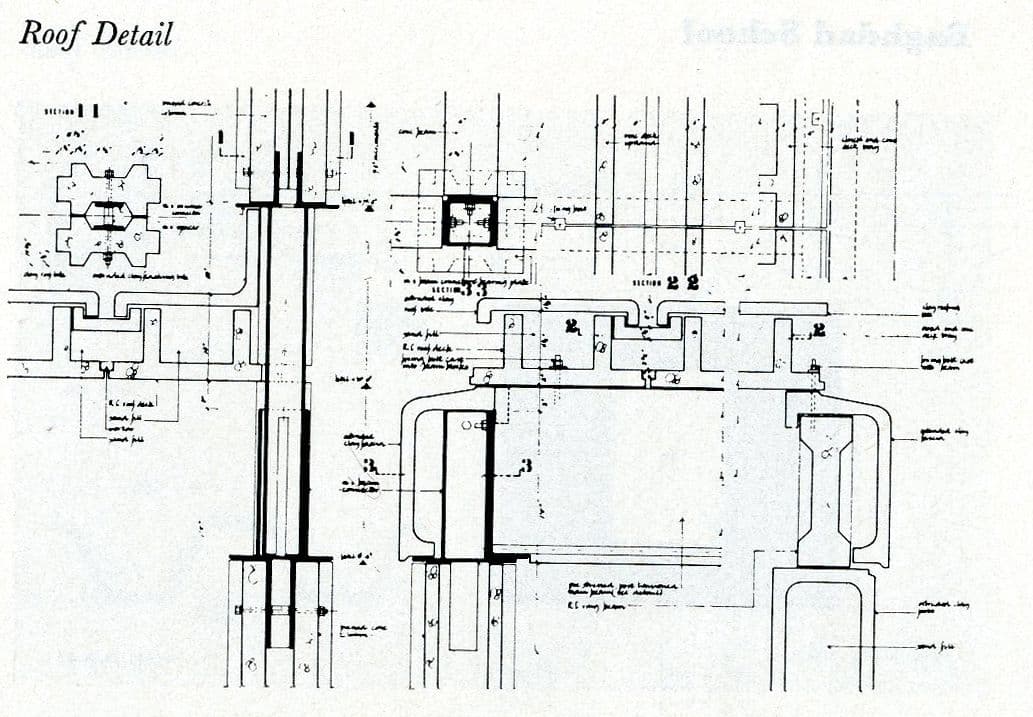
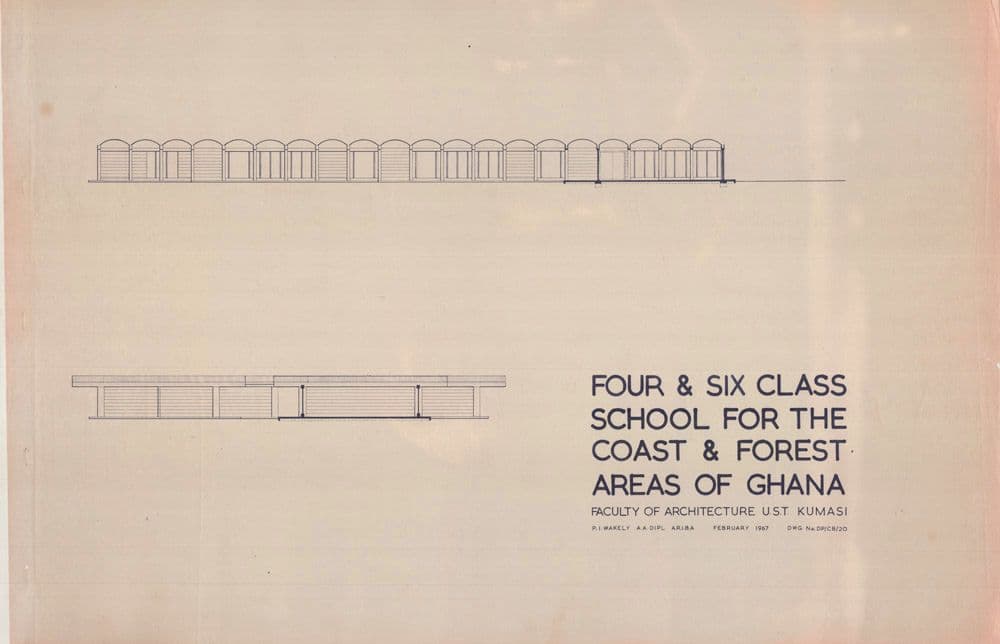
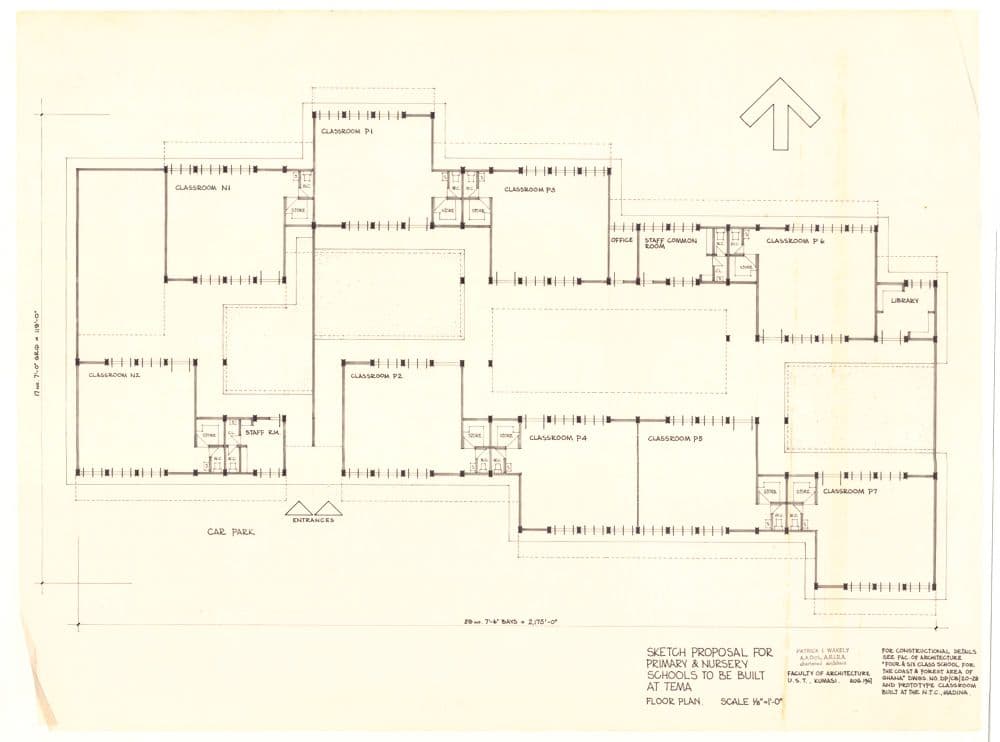
Born in 1939, Patrick Ion Wakely attended Aldenham School, Elstree, before joining the five-year Diploma course at the Architectural Association (AA), London, in 1957. As part of his final year of studies, Wakely opted to join the 1962-63 programme run by the AA’s Department of Tropical Studies. His joint exercise for a ‘Baghdad School’, with classmates Kamil Kahn Mumtaz and Cho Padamsee, was published in the AA Journal of April 1963. His final thesis, a proposal for the University of Dar es Salaam, Tanzania, was equally well received and is preserved in the AA Archives. Upon graduation, Wakley seized the chance to go and teach at Kwame Nkrumah University of Science and Technology (KNUST), in Kumasi, Ghana, the AA and KNUST having recently entered a contract to work together to develop the architecture programme there. At KNUST, Patrick served as a lecturer, responsible for the Design Studio and the teaching of Building Construction to Second Year students. His work was not limited to teaching, however, and Patrick in 1965 undertook research for the Ghana Ministry of Social Welfare and Community Development, recommending improvements for their programme of rural amenity building in the Upper Region. The following year he also carried our research for the Ministry of Fuel and Power, examining the economic and social context of villages within the likely resettlement areas for the Bui Hydroelectric Dam project. Further work, for the Ministry of Education, took place from 1966-68, with Patrick researching primary school building needs and developed a school building system, complete with recommendations for organisational methods and construction procedures, to be applied at a nation-wide level. Photographs and documentation of the construction of a prototype at Madina, a suburb of Accra, is held within the AA Archives. After a brief spell as a Visiting Lecture at the National College of Arts, Lahore, Patrick returned to the AA and was appointed Senior Tutor at the Department of Development and Tropical Studies, where he was in charge of the Education Planning and Building course. Promotion to Deputy Head came in 1970 and when the Department transferred from the AA to University College London (UCL), as the Development Planning Unit (DPU), Patrick continued as Deputy Head and Senior Lecturer. He took on further duties in 1972 as the Director of the DPU Extension Services, a body funded by the Nuffield Foundation, which ran courses on urban planning in architecture schools and government institutions, in Pakistan, India, Sri Lanka, Kenya, Iraq and Thailand. From 1976, Wakely worked first in Colombia, as a professor within the Architecture Faculty at the Universidad De Los Andes, and then as the inaugural Director of a postgraduate Urban Development programme run jointly by the Sri Lanka Urban Development Authority and the University of Moratuwa. In 1982 he returned to London and his role of Senior Lecturer at the DPU, subsequently being appointed Director in 1989 – a position he was to hold until 2003. From 1997-2004 Patrick also served as Vice Dean of UCL’s Faculty of the Built Environment (The Bartlett). Alongside his teaching work Patrick has carried out policy advice consultancy, research and training and project and programme evaluation in over 20 countries. In the 1980s he undertook consultancies for the UN Centre for Human Settlement (South Pacific), the UK Overseas Development Administration (Colombia and Sri Lanka), the British Council Technical Education and Training Operations and Consultancies (Madrid), whilst in the 1990s his work for the World Bank and Habitat involved projects in Ghana, Egypt, Costa Rica, Nicaragua, Indonesia and the Middle East. In the 2000s, his activities have included coordinating the research, writing and editing of the UN Global Report on Human Settlements 2003: 'The Challenge of Slums' (Earthscan, 2002) and the publication of a number of books, the most recent being his 'Urban Social Housing: Global Health and Climate Change Mitigation and Redress', published by Routledge / Taylor & Francis in 2024.
Sources